The Redmi K100 is shaping up to be a rather interesting gaming phone, and its latest Geekbench appearance gives us another reason to pay attention. Xiaomi is pairing a massive 10,000mAh battery and a 165Hz display with a Snapdragon processor that might sound familiar to Redmi K90 owners.
That’s where things get interesting. The Redmi K100 Geekbench listing suggests Xiaomi isn’t chasing the newest chipset this time. Instead, the company appears to be putting its efforts into gaming efficiency, battery endurance, and a smoother display experience.
Redmi K100 Geekbench Scores and Snapdragon Chip
A Xiaomi smartphone carrying the model number M786BC has surfaced on Geekbench 7, with tipster Abhishek Yadav linking the device to the upcoming Redmi K100.
The listing reveals Qualcomm’s Snapdragon 8 Elite processor, paired with 16GB RAM and Android 17. Its CPU configuration includes two performance cores running at 4.32GHz and six additional cores clocked at 3.53GHz.
Here are the reported benchmark results:
| Geekbench 7 test | Score |
|---|---|
| Single-core | 2,705 |
| Multi-core | 9,885 |

Those are promising results, although one benchmark run cannot tell us how well the phone will perform during prolonged gaming sessions.
Interestingly, the Snapdragon 8 Elite isn’t new to Redmi’s lineup. The Redmi K90 already featured the same processor, which Qualcomm originally introduced in 2024.
So, if you’re expecting a major raw CPU performance jump over the K90, the chipset alone doesn’t suggest one. Xiaomi seems to have different priorities for this generation.
Bigger Battery and Faster Display Than Redmi K90
The most meaningful improvements are happening outside the processor.
Xiaomi has confirmed that the Redmi K100 features a 10,000mAh battery, significantly larger than the 7,100mAh cell in its predecessor. That’s an increase of approximately 41%, making battery capacity one of the phone’s strongest selling points.
The display also receives a substantial upgrade.
| Specification | Redmi K90 | Redmi K100 |
|---|---|---|
| Processor | Snapdragon 8 Elite | Snapdragon 8 Elite |
| Battery | 7,100mAh | 10,000mAh |
| Refresh rate | 120Hz | 165Hz |
| Display size | — | 6.83 inches |
The K100’s AMOLED panel supports a 165Hz refresh rate, up to 3,500 nits of peak brightness, a 480Hz multi-finger touch reporting rate, and a 3,500Hz instantaneous touch sampling rate.
Xiaomi also claims native 165fps support in more than 40 games.
Personally, I find the battery upgrade more exciting than another annual processor change. A powerful chipset is great, but being able to play games for longer without constantly checking the battery percentage is just as valuable.
Of course, we’ll need real-world testing before making any claims about screen-on time or gaming endurance.
Xiaomi Is Giving the K100 a Gaming-Focused Identity
There’s more to this phone than its Geekbench scores.
The Redmi K100 features Xiaomi’s dedicated D2 gaming graphics chip, designed to improve frame-rate handling and gaming efficiency.
In Xiaomi’s testing with Honor of Kings, the company claims the device can achieve 144fps at demanding graphics settings while reducing average power consumption by 1.1W with its dedicated graphics processing enabled.
That sounds promising, although these are manufacturer-provided figures rather than independently verified results.
The phone will also ship with HyperOS 4, which Xiaomi says introduces more precise resource allocation, memory preloading, and improved first-party application optimization.
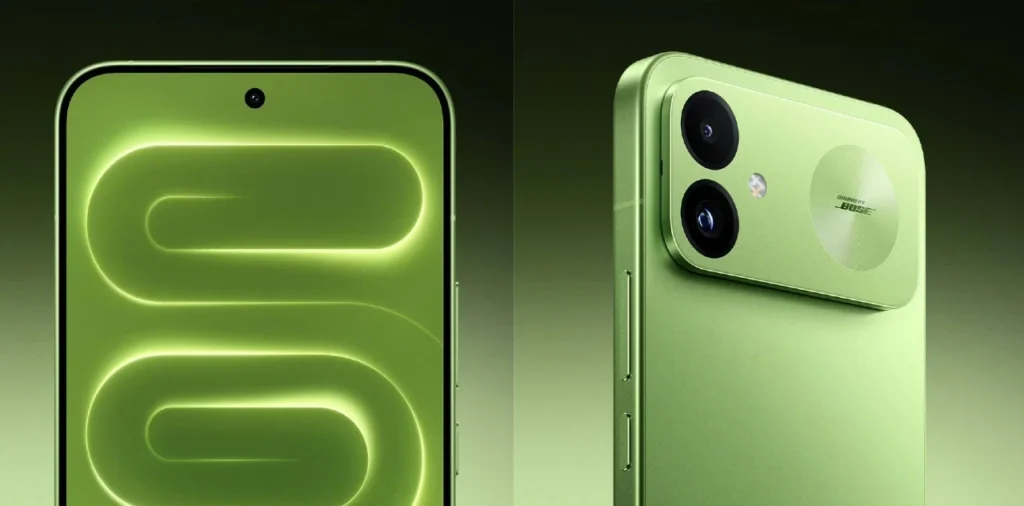
Design-wise, the Redmi K100 has already been shown in a Firefly Green finish, featuring a metal frame, a rectangular rear camera module, and Bose-branded audio.
Rather than positioning the standard K100 as a cheaper version of its Pro siblings, Xiaomi appears to be giving it a clear identity: high-refresh-rate gaming backed by a battery built for extended use.
Redmi K100 Launch Date and What I Think
Xiaomi’s launch announcements schedule the Redmi K100 for October 27, 2026, at 7 PM in China (4:30 PM IST), although some international reports mention October 28.
The phone will join the Redmi K100 Pro and K100 Pro Max, which arrived in China earlier this year.
Official pricing remains unannounced, and Xiaomi hasn’t confirmed whether the standard K100 will launch globally or appear internationally under POCO branding.
I think Xiaomi’s approach here makes sense. The Snapdragon 8 Elite remains a capable flagship processor, and combining it with a 10,000mAh battery, 165Hz display, and dedicated gaming hardware could be more useful than simply upgrading the processor while leaving everything else unchanged.
The real test will be sustained performance, thermals, battery endurance, and pricing.
For now, the Redmi K100 Geekbench results give us an early glimpse of its performance, while the confirmed hardware suggests Xiaomi is building this phone around endurance rather than benchmark records.
Geekbench via @yabhishekhd on X | Redmi on Weibo
Also Read: Leaks: Xiaomi 18 Pro, Pro Max European Prices Leak