Xiaomi has officially announced the Smart Band 11 in Japan, expanding its popular fitness tracker lineup with a brighter AMOLED display, upgraded health monitoring and up to 21 days of battery life. The wearable will go on sale on November 4, 2026, with prices starting at ¥7,980.
The Japanese launch also introduces a Ceramic Edition with a more premium finish, giving buyers an alternative to the standard aluminum model. Both versions share the same essential tracking features, including more than 150 sports modes and a new sleep management assistant.
What makes this release interesting isn’t a dramatic redesign. Xiaomi is refining the everyday experience with a slimmer body, improved sensors and features intended to make the affordable wearable more useful for regular fitness tracking.
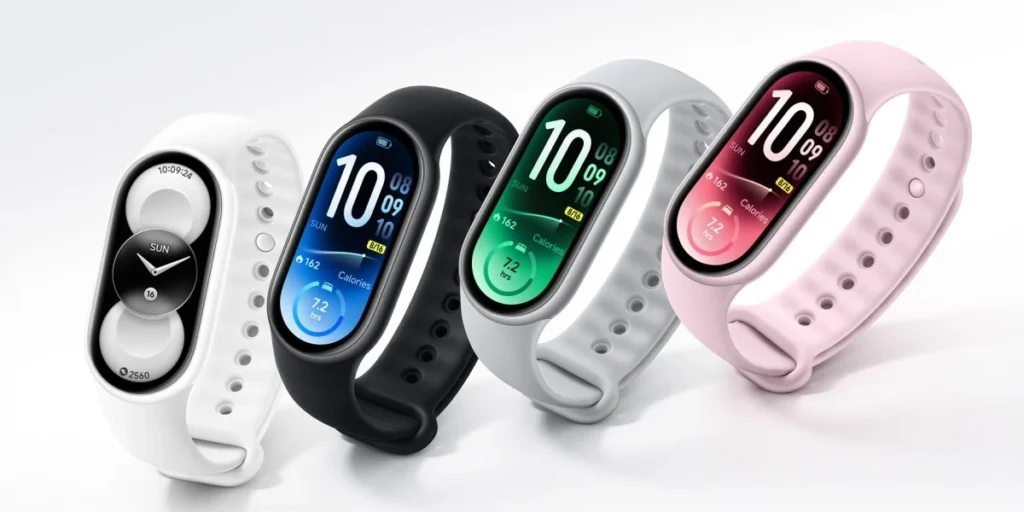
Xiaomi Smart Band 11 Japan Price and Availability
Xiaomi Japan confirmed the Smart Band 11 on October 30, announcing two versions with different exterior materials and pricing.
The regular model comes in Midnight Black, Glacial Silver and Mystic Rose, while the Ceramic Edition is available in Pearl White.
Here are the official prices in Japan:
| Model | Regular price | Early-bird price |
|---|---|---|
| Smart Band 11 | ¥7,980 | ¥6,980 |
| Smart Band 11 Ceramic Edition | ¥10,800 | ¥9,800 |
The introductory discounts run from November 4 through November 12, 2026, reducing the standard model’s price by ¥1,000 and the Ceramic Edition’s price by the same amount.
Interestingly, Xiaomi is already allowing customers to purchase the wearable early through its official Japanese website starting October 30.
The regular retail launch takes place on November 4 through Xiaomi Stores, the Xiaomi Service Center in Akihabara, Xiaomi’s official website, Rakuten, Amazon Japan, Yahoo! Shopping and its official TikTok Shop.
Japan isn’t the first market to receive the new fitness tracker. The Smart Band 11 previously appeared in China and has recently reached Europe, where the regular model starts at €59.99.
However, Xiaomi hasn’t announced a confirmed India launch date or Indian retail price.
2,000-Nit AMOLED Display and Slimmer Design
The Xiaomi Smart Band 11 features a 1.72-inch AMOLED touchscreen with a resolution of 212 × 520 pixels and a 60Hz refresh rate.
The display reaches a claimed peak brightness of 2,000 nits, making outdoor visibility one of its major selling points. Xiaomi also lists a high-brightness mode reaching 1,500 nits.
These figures describe different brightness conditions, so users shouldn’t expect the screen to maintain its maximum advertised brightness continuously.
The display is surrounded by 2.0mm bezels, maintaining the familiar elongated design of previous Xiaomi fitness bands.
Two Materials, Different Weights
Xiaomi has reduced the thickness by approximately 9% compared with the previous generation. The standard model measures 47.44 × 23.66 × 9.99mm and weighs just 15.58 grams without its strap.
The Ceramic Edition measures 47.76 × 23.89 × 9.99mm and weighs 21.45 grams, making it slightly heavier.
The regular model uses an aluminum alloy frame with a TPU strap, while the premium version incorporates ceramic construction and a fluoroelastomer strap.
I think offering two different finishes is a sensible move. Fitness trackers spend most of their time on our wrists, so comfort and appearance can matter just as much as the technology inside.
Better Health Tracking and 150+ Sports Modes
Xiaomi has made several improvements to the Smart Band 11’s health monitoring capabilities.
The wearable introduces an upgraded optical heart-rate system combining dual LED and dual photodiode modules with Xiaomi’s processing algorithms.
According to the company, this arrangement improves heart-rate monitoring accuracy.
The band supports continuous heart-rate tracking, blood oxygen monitoring, abnormal heart-rate alerts and notifications when blood oxygen readings fall below configured thresholds.
Women’s health tracking is also included.
New Sleep Management Assistant
One of the more interesting additions is a sleep management assistant that examines historical sleep records and behavioral patterns.
Rather than simply displaying sleep duration, Xiaomi says the feature can identify potential reasons behind declining sleep quality and provide personalized recommendations.
That’s a useful direction for affordable wearables, although its effectiveness will depend on how accurately the band collects and interprets sleep data.
For fitness enthusiasts, the Smart Band 11 includes more than 150 workout modes, along with 5ATM water resistance.
Xiaomi has also introduced heart-rate monitoring during swimming and Bluetooth heart-rate broadcasting, allowing compatible cycling computers and applications to receive heart-rate data.
These features expand its usefulness beyond basic step counting.
However, the health-monitoring functions are intended for general wellness and fitness tracking, not medical diagnosis.
Xiaomi Smart Band 11 Offers Up to 21 Days of Battery
Battery endurance remains one of Xiaomi’s biggest advantages in the affordable wearable segment.
The Smart Band 11 uses a 233mAh battery, with Xiaomi adopting a high-density graphite battery design to maintain endurance without increasing the device’s thickness.
The company advertises three different battery-life estimates:
| Usage scenario | Claimed battery life |
|---|---|
| Light usage | Up to 21 days |
| Typical usage | Up to 10 days |
| Always-on display enabled | Up to 6 days |
This distinction is important because the headline 21-day figure doesn’t represent every usage scenario.
Someone regularly tracking workouts, receiving notifications and monitoring sleep may experience considerably shorter endurance than the maximum advertised figure.
The wearable supports magnetic charging, with Xiaomi quoting approximately 90 minutes for a full charge under its laboratory conditions.
Android and iPhone Compatibility
The Smart Band 11 supports Android 8.0 or later and iOS 14.0 or later through Xiaomi’s Mi Fitness application.
Xiaomi also highlights improved integration with iPhones, including notification synchronization, remote camera controls and supported media or presentation navigation functions.
Bluetooth 5.4 handles wireless connectivity, while the band includes an accelerometer, gyroscope, electronic compass and ambient light sensor.
These additions make it a relatively versatile companion for people who want basic smartwatch-style convenience without purchasing a full smartwatch.
Is the Xiaomi Smart Band 11 Worth Buying?
The Smart Band 11 looks like a refinement of Xiaomi’s established fitness tracker formula rather than a completely new product.
Its brighter display, thinner body and upgraded heart-rate monitoring system are useful improvements. The sleep management assistant and swimming-focused features could also appeal to people looking for more detailed health and workout information.
Personally, I think the standard model offers the more practical balance. The Ceramic Edition looks attractive, but its higher price mainly pays for materials and appearance rather than a substantially different tracking experience.
Existing Smart Band 10 owners may not find the changes essential unless they particularly want improved screen visibility, updated sensors or the new software features.
For first-time buyers, however, the combination of an AMOLED display, extensive workout tracking, Android and iPhone compatibility and competitive pricing makes the Smart Band 11 worth considering.
With the Xiaomi Smart Band 11 launching in Japan on November 4, the company is continuing to strengthen its affordable wearable lineup while offering buyers more design choices.