The Xiaomi Pad 9 Pro Max has retained first place in AnTuTu’s October 2026 Android tablet rankings for China, recording an average score of 5,206,401 points. The result comes from the 16GB RAM and 1TB storage configuration, powered by Xiaomi’s own XRING O3 processor.
It was the only tablet in the top ten to exceed five million points. The iQOO Pad Ultra finished second with 4,847,214 points, leaving Xiaomi ahead by 359,187 points, or approximately 7.4% relative to its closest rival.
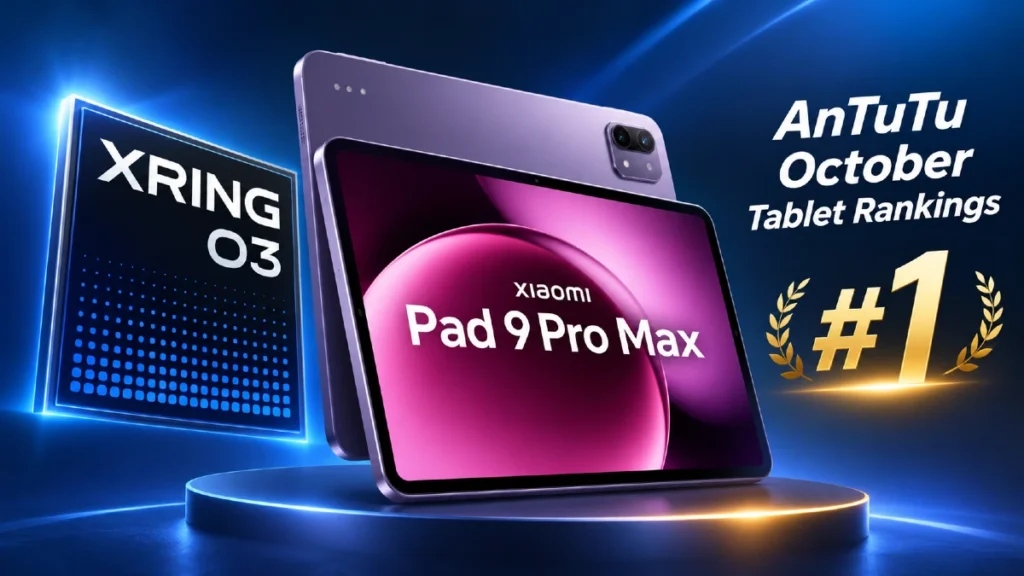
Xiaomi Pad 9 Pro Max Keeps Its Lead With XRING O3
The Pad 9 Pro Max uses Xiaomi’s 3nm XRING O3 chipset, which features a ten-core CPU. The tablet also includes a 13.3-inch display, a 50MP rear camera and a 12,000mAh battery.
Its October result follows a first-place finish in September, when the same listed memory configuration averaged 5,233,432 points.

The latest average is slightly lower, but the tablet remains ahead of the competing devices in the chart. A change in monthly averages does not, by itself, establish that a product has become faster or slower: the submitted test samples and conditions can differ between reporting periods.
The configuration matters, too. The chart identifies a specific 16GB/1TB version, so its score should not automatically be assigned to every Pad 9 Pro Max model.
AnTuTu’s October 2026 Android Tablet Top Ten
The October ranking places the iQOO Pad Ultra behind Xiaomi, followed by Lenovo’s Legion Y700 Wuji, also referred to as the Infinite edition.
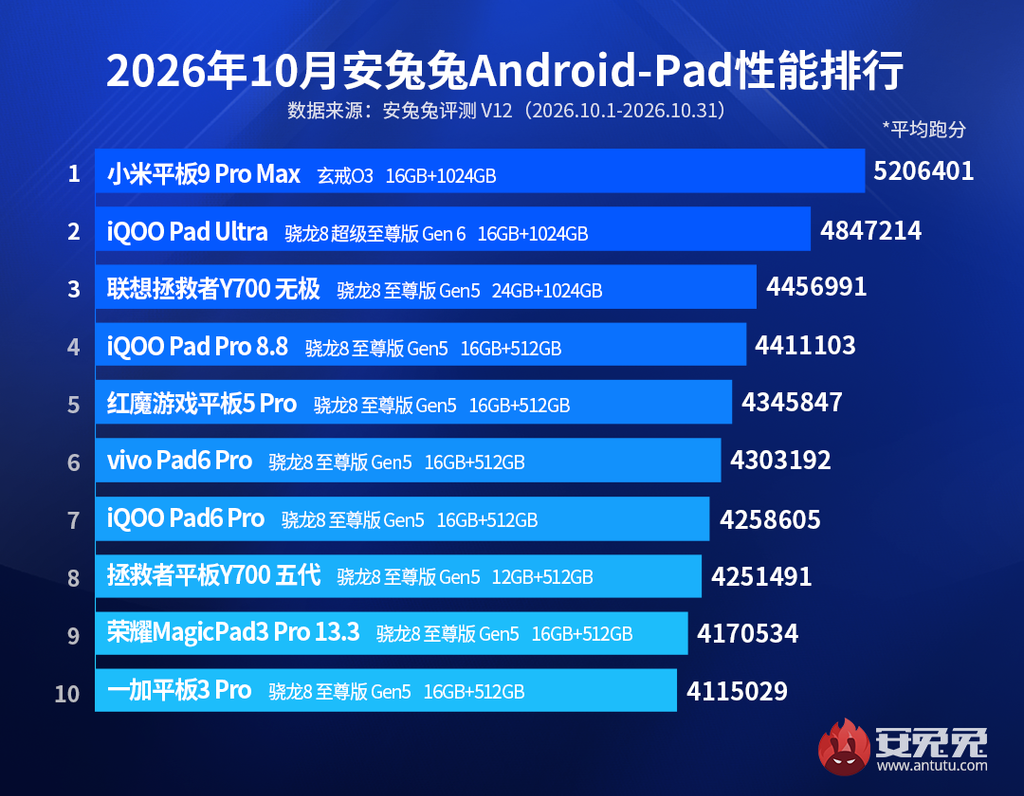
The iQOO Pad Ultra uses Qualcomm’s Snapdragon 8 Elite Extreme Gen 6. Every device from third through tenth place uses the Snapdragon 8 Elite Gen 5, making Xiaomi’s XRING-powered tablet the exception in an otherwise Qualcomm-heavy list.
Xiaomi Finishes Ahead of an Actively Cooled Rival
The second-place iQOO Pad Ultra combines a 2nm Snapdragon 8 Elite Extreme Gen 6 processor with a built-in cooling fan. The Xiaomi Pad 9 Pro Max does not have an internal fan.
That makes the result notable, but it does not isolate the processors for a direct comparison. AnTuTu measures the complete device, including CPU, graphics, memory and user-experience performance.
Cooling design, memory configuration and software behaviour can all influence the total. A higher overall score therefore does not mean Xiaomi’s processor will outperform the competing chip by the same percentage in every application.
Nor does the manufacturing-process label alone determine the winner. The 3nm Xiaomi device leads this particular ranking despite competing against a newer 2nm Qualcomm-powered tablet.
What the Rankings Tell Buyers
The October results use AnTuTu V12 and cover tests collected in China between October 1 and October 31, 2026.
AnTuTu ranks devices using averages of user-submitted results rather than their highest individual scores. Its published methodology excludes models with fewer than 1,000 qualifying runs during the month and limits the dataset to mainland China.
This is therefore a regional Android performance ranking, not a comparison of every tablet sold worldwide. It does not include Apple’s iPads, and some listed models may not be officially available internationally.
The scores also do not measure everything that matters when choosing a tablet. Battery endurance, sustained gaming performance, display quality, software support and accessory compatibility require separate assessment.
For the Xiaomi Pad 9 Pro Max, the result confirms another month at the top of this benchmark chart. Its lead is meaningful within that test, while broader claims about being the best tablet need more than a single combined score.
Source: AnTuTu
Also Read:.
POCO X8s Launched in Poland and Singapore: Check prices and specifications.
HyperOS 4 Adds HyperIsland Settings With App Controls